

North Rhine-Westphalia

Presentation of the Region
North Rhine-Westphalia is Germany’s most populous federal state with its favourable location in the centre of Europe. It is the economically strongest federal state and an important driver of Germany’s overall development. 21% of the national gross domestic product is generated here. It is home to efficient and internationally competitive companies, including many hidden champions, as well as a strong middle class. Industry in North Rhine-Westphalia, together with industry-oriented services, accounts for about 40% of the value added in our state. In our industrial policy model we have developed 8 fields of action to secure and expand the international innovation and competitiveness of North Rhine-Westphalia as an industrial location.
With its large number of universities and research institutes as well as its huge potential of qualified skilled workers, North Rhine-Westphalia offers great potential to continue to be an important driver of innovation, growth and employment in the future.
The basis of the diverse innovation and modernisation tasks is digitalisation, which plays a key role as a cross-sectional task. Another focus is the transfer of technology from research to industry. We promote both through a comprehensive range of support services.
RIS3 Priorities
The megatrends of digitalisation, climate change, scarcity of resources and sustainability are changing the world of work and life today. Accompanying this change and shaping it is one of the central tasks of state policy. With the Regional Innovation Strategy 2021-2027, we are creating a common framework for the diverse activities of research and innovation funding in the state of North Rhine-Westphalia and its regions.
The guiding principles of the innovation strategy are intelligent specialisation and a consistent focus on the future. In North Rhine-Westphalia, we want to concentrate on those topics that are of particular relevance for economic and social development and in which, at the same time, the actors in the state already have strengths or in which future strengths can be expected. Against this background, we have identified fields of innovation that we consider to be particularly important for the future of North Rhine-Westphalia as a location for innovation. The fields of innovation are designed in such a way that cross-disciplinary and cross-sectoral cooperation (cross-innovation) is generally required to work on them.
Our goal is to organise the discovery process for innovations and provide support measures that enable companies, research and citizens to jointly create something new, creative and implementable.
Political Representative:
Mona Neubaur
Minister for Economic Affairs, Industry, Climate Action and Energy of the State of North Rhine-Westphalia
Regional Contacts:
Dr. Simon Hennchen
Head of unit Innovation Policy
Advisor in the Unit Innovation Policy
Brussels Contact Persons
Mirko Jularic
Representation of the State of North Rhine-Westphalia to the European Unio
Regional Address
Berger Allee 25
40213 Düsseldorf
Germany
Brussels Office Address
Rue Montoyer 47
1000 Brussels
Belgium
Our Pilots


Latest Updates
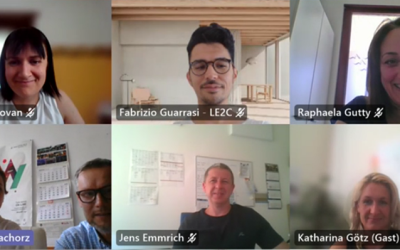
Hydrogen Pilots Stakeholders Meet Hydro Comp Demo Case Inaugural Meeting
On Monday, June 19, the inaugural meeting of HYDRO-COMP demo case partners took place. The conference was organized remotely by Małopolska, Saxony and Slovenia. The event was an opportunity to present the technological potential aimed at achieving the objectives of the demo case, at the same time se…
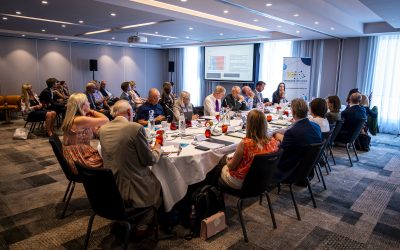
Vanguard Initiative High Level Directors Meeting 2023 Platform Showcase Successes Vi
The VI High-Level Directors Meeting – HLDM 2023, took place on 15 June in Brussels. Over 75 delegates from across Europe attended the meeting, which provided a platform to showcase the successes of the VI methodology as an innovation accelerator for all the stakeholders connected through its network…
Sme Success Stories Within Vanguard Initiative Interview Representative Remembrane
In these unprecedented times, SMEs across Europe are facing profound transformation processes in which the technological challenges are becoming ever greater and, at the same time, the need of embracing the twin (digital and green) transition needs to be tackled quickly and decisively. Therefore, a …