

Slovenia

Presentation of the Region
Slovenia became an independent country in 1991. As a member of the European Union since May 2004 and of the Eurozone since 2007, Slovenia is an advanced, independent and very open country. Slovenia has a long industrial tradition, highly educated workforce, well-developed infrastructure, and is situated at a major transport crossroad. Slovenia’s export competitiveness attribute to the restructuring of the Slovenian economy towards high-tech products and the markets. Exports accounts for around 75% of the country’s GDP, more than three-quarters of trade was with EU member states. Slovenia’s main exporting partners are Germany, Italy, Croatia, Austria and France while the main exported product groups were motor vehicles, electrical equipment, pharmaceutical products, machinery and equipment and metals.
Knowledge-intensive services lead to manufacturing or technological innovations and sharpen the competitive edge of Slovenia’s manufacturing industries at home and abroad. The flagship industries include: pharmaceuticals and chemicals, electronics and electrical engineering, machine building, wood processing, food processing, textile, life science and hospitality and entertainment.
Favourable business environment makes Slovenia an excellent base for business development and growth, encouraged by high performance education system, which in the final stages allows the inclusion of students in advanced research, business and international projects.
RIS3 Priorities
Slovenian Smart Specialisation Strategy sets out national strategic development priorities and niches that are supported on the ground by a comprehensive, focused and tailored policy mix. By implementing S4, Slovenia has rolled out an entirely new model of development and innovation cooperation between the key stakeholders and has significantly improved its integration in the European and global development and innovation networks, thematic platforms and consortia. S4 has been the driving force behind efforts to strengthen and take Slovenian innovation ecosystem to the next level, and has facilitated clustering and cluster-based economic development via so called Strategic Research and Innovation Partnerships.
Slovenia is currently finalizing the adopition of the rewised Smart Spesialisation Strategy until 2030.
The main priorities of the S5 are:
• Materials as end products
• Mobility
• Health – Medicine:
• Factories of the future
• Sustainable tourism
• Sustainable food production
• Network for transition to circular economy
• Smart buildings and home including wood chain
• Smart cities and communities
• Horizontal ICT network
Essential pillars of the implementation processes of Slovenian Smart Specialisation Strategy are Strategic Research and Innovation Partnerships, known as SRIPs. They are based on a stable and participatory governance structure involving quadruple helix stakeholders across the different levels of government.
Political Representatives
Government Office for Development and European Cohesion Policy
Kotnikova ulica 5 1000 Ljubljana TEL: +386 1 400 36 80
Ministry of Education, ScienceMinistry of Education, Science and Sport
Masarykova cesta 16 1000 Ljubljana Tel: +386 1 400 52 00 channel/UCNKshm9ZXB0hAP2QcorYyZw MIZS.gov.si MIZS_RS
Ministry of Economic Development and Technology
Kotnikova ulica 5 1000 Ljubljana Tel: +386 1 400 33 11 MGRT.gov
Regional Address
Government Office for Development and European Cohesion Policy Kotnikova ulica 5 1000 Ljubljana Slovenia
Brussels Office Address
Slovenian Business and Research Association Rue Belliard 40 1040 Brussels Belgium
Latest Updates

Esm Plenary Event Achievements 2021 And Future Plans 2022
On the 9th of December the final event of the Efficient and Sustainable Manufacturing Pilot take place, co-coordinated by Giacomo Copani (AFIL, Lombardy), Patrick Vuillermoz (Polymeris, Auvergne Rhone-Alpes) and Joan Guash (Eurecat, Catalonia).After a preliminary introduction of the Pilot, each demo…
Progress Update Nano Pilot 1
Partnering Opportunity: the MEMS for nano-analytiX demo case published a technology offer on the EEN portalThe Bologna Unit of CNR-IMM is the leading organization of the MEMS for nano-analytiX demo case. The research institute has the biggest publicly funded facility for silicon micro-machining in …
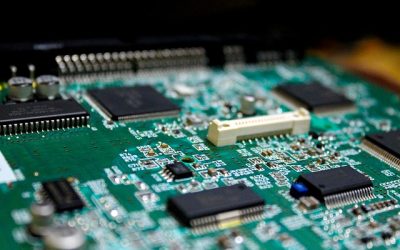
Skane Has Launched Call Interest European Regions Strengthening European Semiconductor
The democase Nanowires for Energy and ICT applications is focused on establishing regional partnerships to strengthen the European semiconductor system. In Skåne, several organisations already contributed to the semiconductor value chain. Thus, there is a great possibility to further develop, in col…