

Aragon

Presentation of the Region
Aragon is a “moderate innovator” (17 places better than in 2019), ranking 6th among the Spanish Comunididades Autónomas.
The Economic Specialisation pattern of Aragon concentrates its capacities in areas of activity that represent 79.16% of total regional Gross Value Added (GVA).
The manufacturing industry, which consists essentially of automotive and machinery and equipment manufacturing, accounted for 17.81% of the Gross Value Added of Aragon, making it one of the most industrialised regions of Spain, given that the manufacturing industry accounts for 12.30% of total GVA at national level.
Meanwhile, services connected with the industry account for 7.98% of this regional GVA. At national level, services connected with the industry account for 12.83% of the total national GVA, showing that Aragon still has significant growth potential to meet the aforementioned national average.
Energy is a strategic sector for Aragon, it being the second-largest region in Spain with installed wind power accounting for 15.6% of the national total, in a context in which Spain is the second-largest country in terms of installed wind capacity in Europe. 80% of all energy generated in Aragon came from renewable resources.
The food industry is particularly noteworthy in terms of feed, meat, bakery, pasta and beverage manufacturing activities. In this context, agriculture and livestock farming accounts for 5.88% of regional GDP, which is well above the national average of 2.88%.
Other sectors with a significant impact on the Aragonese economy are trade, transport and storage, i.e. logistics, which includes 430 companies and generates 13,000 jobs in Aragon, and hospitality, an activity that contributes towards the development of regional tourism. Together they represent 20.66% of regional GDP.
In addition, the public sector has a significant weight on regional GDP, reaching 18.94%.
The Business Specialisation Coefficient of Aragon indicates that, compared to the Spanish average, the region is highly specialised in the business activities with the greatest impact on the regional economy are industrial, energy and environmental. Aragon also has a positive specialisation coefficient in other sectors, such as health and well-being, chemistry, food industry and IT products.
The Technological specialisation pattern shows that Aragon has capabilities in Key Enabling Technologies (KETs) applied to the region’s strategic business areas.
More information: https://www.aragon.es/-/ris-3-y-s3-aragon-estrategia-de-investigacion-e-innovacion-para-una-especializacion-inteligente
RIS3 Priorities
- Sustainable mobility
- Agrifood
- Health and well-being
- Green energy and fuels
- Advanced technologies
- Cultural and creative industries and sectors
Political Representatives
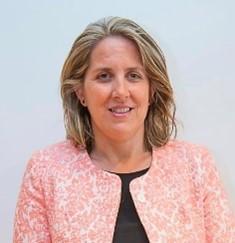
María del Mar Paños de Arriba
Directora General de Promoción industrial e Innovación (General Director for Industrial promotion and Innovation)
Regional Address
Paseo María Agustín, 36, puerta 28, perimera planta
50004 Zaragoza Zaragoza
Spain
Brussels Office Address
Boulevard du Régent, 52
1000 Brussels
Belgium
Our Pilots

Latest Updates
Skane Has Launched Call Interest European Regions Strengthening European Semiconductor
The democase Nanowires for Energy and ICT applications is focused on establishing regional partnerships to strengthen the European semiconductor system. In Skåne, several organisations already contributed to the semiconductor value chain. Thus, there is a great possibility to further develop, in col…

Progress Update Bioeconomy Pilot 1
General Assembly of the Bioeconomy Pilot celebrates the first Natural Fibertastic lustrum at Biobased DeltaBiobased Delta hosted the Pilot General Assembly 2021 edition in physical and digital mode at the end of September. Researchers, entrepreneurs, politicians meet to discuss and share the latest …
Vanguard Initiative Participates Third Plenary Session Industrial Forum European Commission
The Commissioner responsible for the Internal Market, Thierry Breton, and his team from the Commission, together with the representatives of the 27 EU Member States and the 28 European experts in industrial policy selected by the Community executive discussed the activity carried out in the monitori…