
Flanders
Presentation of the Region
Flanders is an autonomous region located in the northern part of Belgium, with Brussels as its capital. It manages important competencies and budgets in many policy fields.
Flanders is a part of the top group of ‘Innovation leaders’.
The industrial sector is very important for Flanders. It provides a significant amount of added value, employment (also in R&D and services) and export. A competitive and productive industry makes Flanders thrive. Throughout the years, we developed an industrial policy that stimulates the development of the industry and lifts the level of productivity to the top. Spearhead clusters form an integral part of this policy.
Today’s society is facing various challenges coming from ongoing trends in globalization, automation, digitization, climate change, mobility,… . Our Flemish industry contributes actively to solving these challenges. Yet, working together, blurring frontiers between countries, regions and sectors, is the way forward. Collaboration is needed across Europe to imagine new solutions for the future. Opportunities emerge at the crossroads between sectors and technologies.
Flanders actively strives for a strong European policy that protects the international competitiveness of our industry. For this reason, we actively participate in international initiatives like the Friends of Industry and the Vanguard Initiative.
RIS3 Priorities
We have a very strong specialisation in printing and reproduction of recorded media and strong specialisations in the production of chemical products (exc. pharmaceuticals), and other industrial products. These are usually sectors that are closely linked to the intermediate position of Flanders in international value chains that is linking Flanders to larger economies. In addition, there also exists specialisation in a “traditional” sector such as food products, which is a very important industrial sector in terms of employment with a wide set of specialisations such as pork meat, frozen vegetables and potatoes, etc. Also, the textiles sector (and wearing apparel) is still a specialisation and relatively overrepresented in Flanders and has been undergoing for many years already a restructuring process to remain competitive and has thus strongly transformed. An increasing part in the turnover is taken by technical textiles for niche markets, besides the specialized carpet industry.
The 10 priority domains in our smart specialisation strategy are:
1. Sustainable chemistry (Catalisti)
2. Advanced materials (SIM)
3. Smart manufacturing (Flanders Make)
4. Health and life sciences (vib)
5. Specialised logistics (VIL)
6. Agro-Food (Flanders Food)
7. Electronic systems, Iot and photonic systems (imec)
8. Energy (Flux 50)
9. Environment & cleantech (Vito)
10. Blue economy (Blue Cluster)
Political Representatives

Hilde Crevits
Minister of Economy, Innovation, Work, Social Economy, Agriculture and Fishing
Regional Contact Persons
Liesbet Schruers
Policy advisor
Regional Address
Bd Roi Albert II 35 1030 Brussels Belgium



Latest Updates
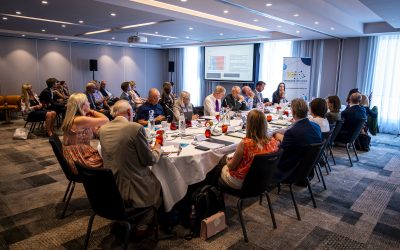
Vanguard Initiative High Level Directors Meeting 2023 Platform Showcase Successes Vi
The VI High-Level Directors Meeting – HLDM 2023, took place on 15 June in Brussels. Over 75 delegates from across Europe attended the meeting, which provided a platform to showcase the successes of the VI methodology as an innovation accelerator for all the stakeholders connected through its network…
Sme Success Stories Within Vanguard Initiative Interview Representative Remembrane
In these unprecedented times, SMEs across Europe are facing profound transformation processes in which the technological challenges are becoming ever greater and, at the same time, the need of embracing the twin (digital and green) transition needs to be tackled quickly and decisively. Therefore, a …

Sme Success Stories Within Vanguard Initiative Interview Representative Bond High Performance
In these unprecedented times, SMEs across Europe are facing profound transformation processes in which the technological challenges are becoming ever greater and, at the same time, the need of embracing the twin (digital and green) transition needs to be tackled quickly and decisively. Therefore, a …